
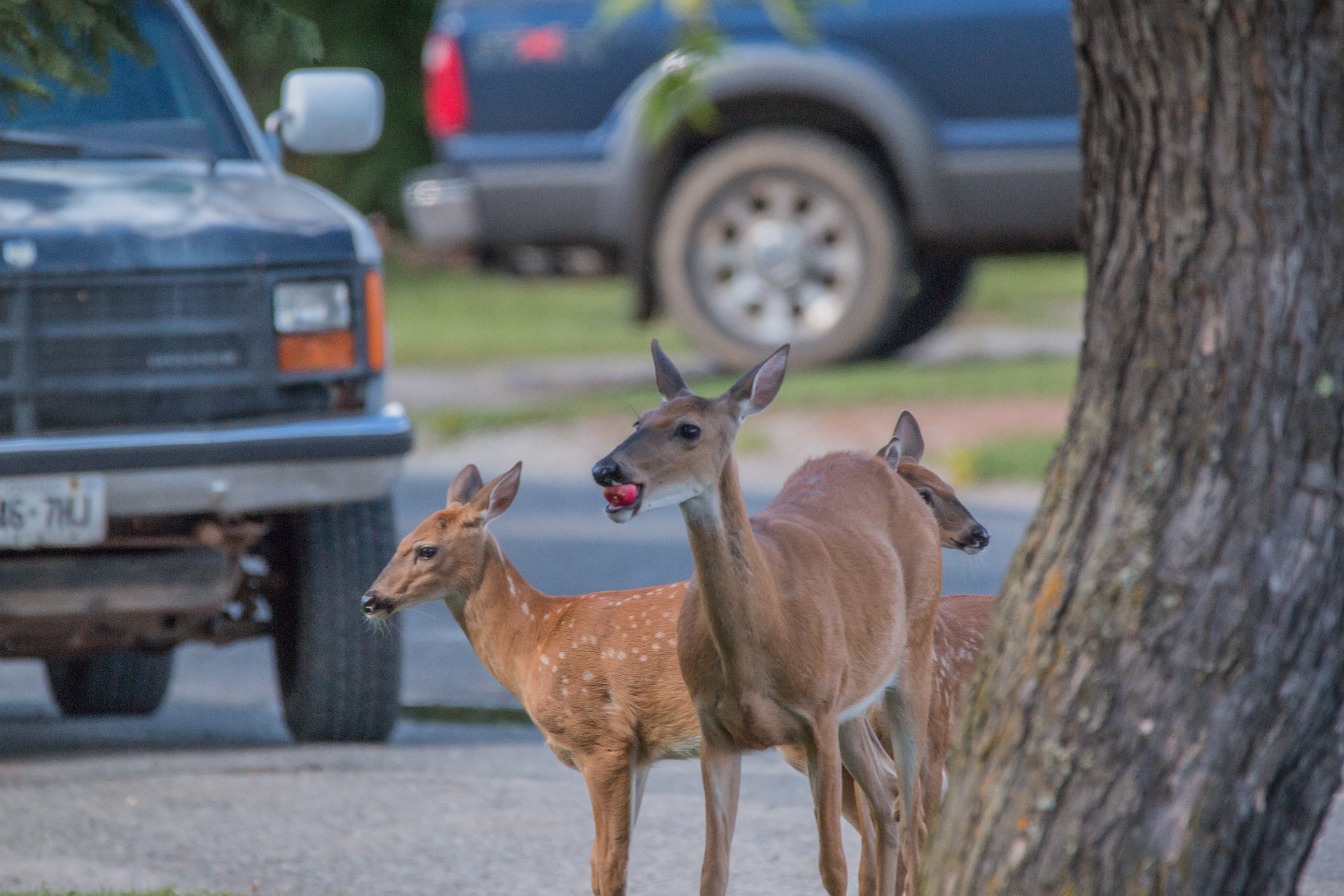
Deer can enter the road with little warning, particularly when light is limited and visibility is reduced. By staying attentive, managing your speed, and knowing how to respond if a deer appears, you can help protect yourself, your passengers, and your vehicle. It is also helpful to understand how your auto insurance may respond if a deer collision occurs.
Why Deer-Related Accidents Increase in Fall
Drivers should take extra care as days grow shorter because deer are more active during the fall. From October through December, deer often travel more frequently and may cross roads at times when motorists have a harder time seeing them.
The risk is often highest at dawn, dusk, and shortly after dark. Deer can be difficult to notice near wooded edges, shoulders, medians, and open areas until they are very close to the road.
Because a deer may step into traffic unexpectedly, staying focused during low-light driving conditions is an important part of avoiding an accident.
Watch the Roadside in Deer-Prone Areas
Safe driving involves more than watching the lane directly in front of your vehicle. Scan both sides of the roadway for movement, especially when traveling through places where wildlife is likely to be present.
Wooded routes, rural roads, open fields, and areas marked by deer crossing signs all call for additional awareness. Those signs are a useful reminder that deer may be nearby and that slowing down can be wise.
Reducing distractions gives you more time to recognize a hazard and react safely if an animal enters the roadway.
Reduce Your Speed for More Reaction Time
Your speed can make a meaningful difference when a deer suddenly appears ahead. Driving at or below the posted limit gives you additional time to identify the danger, brake safely, and keep your vehicle under control.
This is especially important on two-lane roads, country highways, and routes bordered by trees or open land. Deer may be difficult to see until the last moment in these settings.
Even a small decrease in speed may provide the extra seconds needed to avoid a deer or lessen the severity of a collision.
Make Effective Use of Your Headlights
Headlights are a valuable safety feature when driving at night. When there is no approaching traffic, high beams can extend your range of vision and help you spot deer farther down the road.
Once you see a deer in or near your path, however, consider dimming your lights. Bright headlights can startle an animal and cause it to remain still rather than move away from the roadway.
Using your headlights appropriately can help you see more clearly while avoiding unnecessary surprises for wildlife.
Expect More Than One Deer
Seeing one deer does not necessarily mean the roadway is clear. Deer frequently travel in groups, and another animal may follow the first one across the road.
After a deer crosses your lane, avoid immediately picking up speed. Continue slowing down, keep looking along both sides of the road, and allow a few additional moments for other deer to appear.
A little patience can help prevent a second unexpected encounter.
Brake Safely Rather Than Swerving
When a deer enters the road, many drivers instinctively want to steer around it. In many situations, swerving can create a greater risk than striking the animal.
A sudden lane change may put you in the path of oncoming traffic or send your vehicle toward a guardrail, tree, ditch, or other roadside hazard. Those outcomes can result in a more serious crash.
If a collision cannot be avoided, keep a firm grip on the wheel, brake in a controlled way, and remain in your lane whenever possible.
Do Not Depend Solely on Deer Whistles
Some motorists use deer whistles or similar products in an effort to prevent wildlife collisions. While these devices may seem reassuring, they should not take the place of alert and careful driving.
Paying attention to the roadside, reducing speed in areas where deer are common, and braking safely remain the most dependable precautions. If you see a deer, sounding your horn may encourage it to move, but staying focused is still your strongest defense.
Steps to Take After Hitting a Deer
Even cautious drivers can be involved in a deer collision. If it happens, focus first on the safety of everyone in your vehicle.
If you can do so safely, move your vehicle away from traffic and turn on the hazard lights. Check yourself and your passengers for injuries, call emergency services when medical assistance is necessary, and notify law enforcement if local requirements apply.
Do not approach the deer, even if it appears injured. An injured animal may react unpredictably and can be dangerous.
When it is safe, photograph the damage to your vehicle before starting an insurance claim. Clear documentation can make the reporting process easier.
Does Auto Insurance Cover Deer Damage?
Damage caused by striking a deer is often treated differently from other types of vehicle accidents. In many cases, a deer collision is covered by the comprehensive portion of an auto insurance policy instead of collision coverage.
Drivers with liability-only coverage typically do not have protection for damage to their own vehicle. Since every policy has its own terms, it is important to review your coverage before an accident happens.
As a local, independent insurance agency in Calhoun, Georgia, The Brothers Insurance Group can help individuals and families understand their personal insurance options. We compare insurance quotes from multiple carriers and provide clear guidance on auto insurance, home insurance, and other North Georgia insurance needs.
If you would like to review your policy or have questions about coverage for deer-related vehicle damage, contact The Brothers Insurance Group at (706) 403-2999. We are here to help you feel more prepared before you need to file a claim.